Everyone’s got that one skill they wish they could master—whether it’s coding, speaking a new language, playing a musical instrument, or even cooking like a pro. The problem? We think it takes years to get there. You’ve probably heard about the “10,000-hour rule,” the idea that it takes that long to become great at anything. But what if that’s not the whole story?
Meet five learning pioneers who’ve rewritten the rules of skill acquisition. Through clever hacks, neuroscience, and a lot of experimentation, they’ve proven you can learn just about anything—fast. Like, 10x faster than you might think. Here’s how they do it—and how you can, too.
—
1. Josh Kaufman: The First 20 Hours Are All You Need
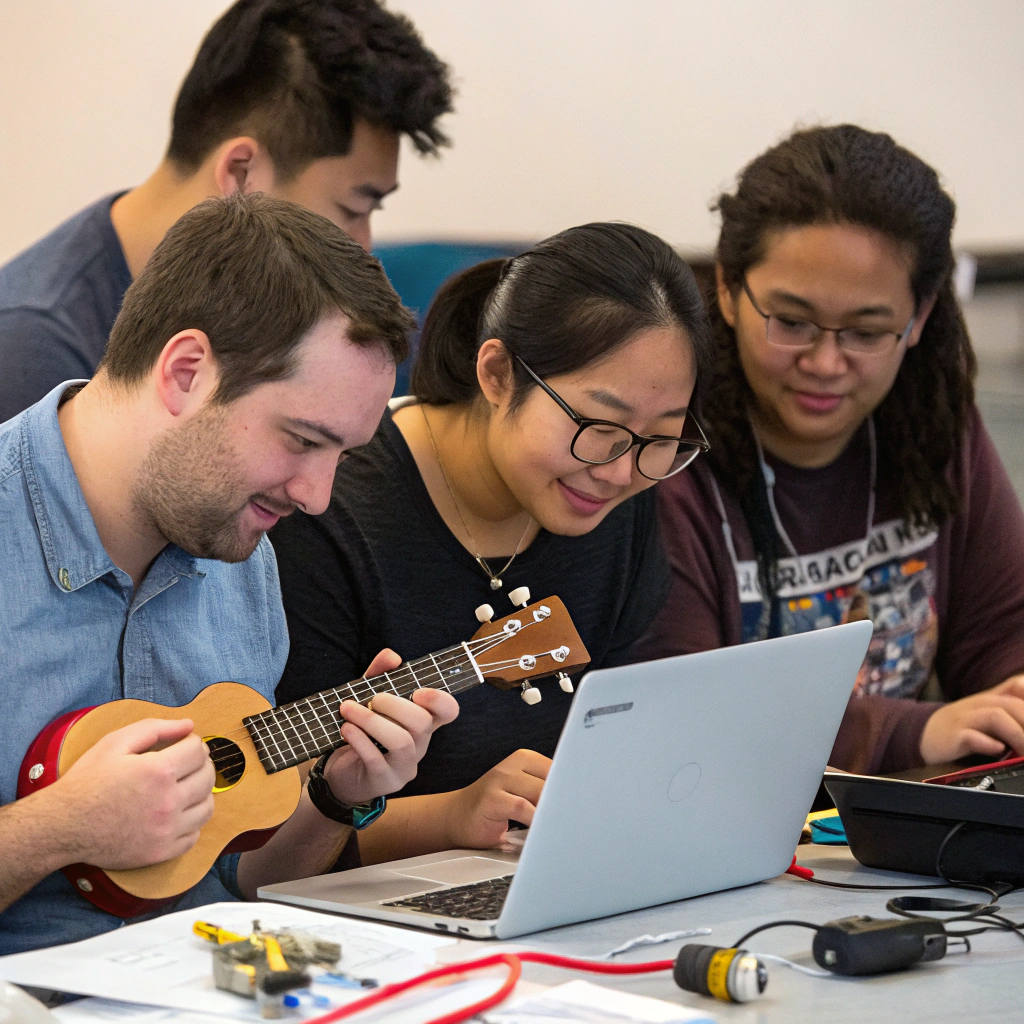
You know how most people say you need to spend thousands of hours to get good at something? Josh Kaufman says forget that. In fact, he wrote a whole book called The First 20 Hours: How to Learn Anything… Fast! where he shares how he learned to code, play the ukulele, and even windsurf—with just 20 focused hours for each.
The key? Get rid of distractions. Identify the most important parts of the skill. Break it down. Then practice deliberately for short, consistent sessions.
Instead of passively watching tutorials or reading endlessly, Kaufman emphasizes doing the thing. He explains that the hardest part of learning any new skill isn’t the practice—it’s getting past the frustration barrier. By pushing yourself through those first 20 hours, you lay the foundation for rapid improvement.
Quick Hack from Kaufman:
– Deconstruct the skill into its most basic elements.
– Learn just enough to self-correct.
– Remove barriers, like distractions or bad tools.
– Commit to at least 20 hours. You’ll be amazed.
—
2. Scott Young: The Guy Who Did MIT’s Computer Science Degree… In One Year
Sounds too good to be true, right? But Scott Young actually did it. He completed the equivalent of MIT’s four-year computer science curriculum—on his own, in just 12 months. No Professors. No tuition. No traditional classes.
He called it the “MIT Challenge,” and he did it all using free resources—like lecture videos and assignments posted online.
His secret? Don’t just consume—actively do. Young didn’t just watch hours of lectures; he applied what he learned immediately. He wrote code, built projects, and constantly tested himself as he went.
He tapped into a powerful learning method known as “active recall,” which involves pulling knowledge out of your brain, rather than just feeding information into it. And he practiced something called “project-based learning”—building real things to apply concepts.
Scott’s Study Hacks:
– Learn by doing—immediately apply what you learn.
– Test yourself instead of rereading notes.
– Use real-world projects to stay engaged.
—
3. Tim Ferriss: The Master of Skill-Hacking
Tim Ferriss is the human guinea pig of productivity and life optimization. Known for The 4-Hour Workweek, he’s become sort of a mythic figure when it comes to rapid skill learning. But how does he actually do it?
In his book The 4-Hour Chef, Ferriss introduces a framework called DiSSS:
Deconstruction: Break the skill down into smaller pieces.
Selection: Find the most valuable 20% that gives you 80% of the results.
Sequencing: Learn things in a logical, efficient order.
Stakes: Add consequences or rewards to keep yourself accountable.
Ferriss used this method to learn Japanese, dance the tango at a world-class level, and become a national champion in kickboxing. No joke.
He’s all about analyzing how masters succeed—then stealing their methods and compressing their timelines.
Tim’s Ninja Moves:
– Find the “minimum effective dose”—the smallest input for the biggest result.
– Mimic top performers and reverse-engineer their steps.
– Make learning fun—and high-stakes.
—
4. Dr. Barbara Oakley: The Brain Hacker Who Beat Math
Barbara Oakley used to hate math. In fact, she was that student who believed she just “wasn’t a math person.” Flash forward a few years—she’s now an engineering professor.
So what changed? She started studying how the brain learns—and designed learning methods accordingly. Oakley co-created one of the most popular online courses in the world: Learning How To Learn, which has helped millions unlock their learning potential.
Her approach blends neuroscience with practical strategies. She popularized techniques like chunking (grouping data into meaningful blocks) and focused vs. diffuse thinking (switching between intense focus and relaxed creativity). She also emphasizes the power of interleaving—mixing different skills or subjects to deepen your understanding.
Oakley’s Brain Boosters:
– Use spaced repetition to improve memory.
– Take breaks to enter “diffuse mode”—where creativity happens.
– Sleep and exercise aren’t optional—they’re part of the learning process.
—
5. Anders Ericsson: The Father of Deliberate Practice
If the name sounds familiar, it’s because Anders Ericsson’s research inspired Malcolm Gladwell’s famous “10,000-Hour Rule.” But here’s the twist: Ericsson didn’t actually say everyone needs 10,000 hours. What he really emphasized is deliberate practice—not just any practice.
Deliberate practice involves stretching yourself just beyond your current capability. It’s effortful. It’s uncomfortable. But it’s where real growth happens.
Instead of mindlessly running drills or playing scales, top performers use feedback, constant correction, and targeted improvement to level up. Ericsson studied chess masters, concert violinists, and elite athletes—and in every case, it wasn’t just time that mattered. It was what they did with that time.
Ericsson’s Golden Rules:
– Seek constant feedback.
– Focus on tiny improvements over time.
– Don’t avoid mistakes—use them as fuel.
—
How to Learn Like the Pros: Your 10x Skill-Learning Blueprint
So what happens when you combine these experts’ strategies? Magic. Well, not literal magic, but a supercharged system for getting good—even great—at anything:
1. Choose Wisely
Pick a skill that excites you. Intrinsic motivation matters more than you think.
2. Deconstruct It
Break down the skill into its smallest, most effective components. Prioritize what matters most.
3. Learn by Doing
Don’t get stuck in the research phase. Apply what you learn right away.
4. Use DiSSS
Structure your path using Tim Ferriss’ framework: Deconstruction, Selection, Sequencing, Stakes.
5. Practice Deliberately
Push your limits. Seek feedback. Train your weaknesses.
6. Engage in Spaced Repetition
Review over time for long-term retention. Use flashcards, quizzes, or quick drills.
7. Mix It Up
Combine learning modes—videos, books, real-world application. Interleave subjects if possible.
8. Switch Between Focus Modes
Alternate between intense focus and relaxed reflection. Let ideas bake in the background.
9. Build Stakes, Make it Fun
Bet on your progress with a friend, join a challenge, or gamify your learning.
10. Trust the 20-Hour Rule
Commit to just 20 hours. You’ll be amazed at what’s possible.
—
Final Thoughts: You’ve Got This
Learning doesn’t have to be a grind. And you definitely don’t need a decade of practice to become decent—if not great—at something. Whether you want to build an app, cook Michelin-worthy meals, learn Spanish, or finally tackle that guitar gathering dust in your closet, the tools are out there. More importantly, you now have a roadmap.
These five pros didn’t just theorize about better learning—they lived it. They proved that with curiosity, a bit of structure, and the courage to suck at something new, anyone can level up.
So pick your skill, clear 20 hours in your calendar, and start today. Because your next breakthrough is only one focused session away.
—
P.S. What skill have you always wanted to learn but never started? Let us know—maybe we’ll crack it together.


Leave a Reply